Electronic Invoicing Is Not Bookkeeping: A CPA View on Reconciling Sales, Collections and the Ledger
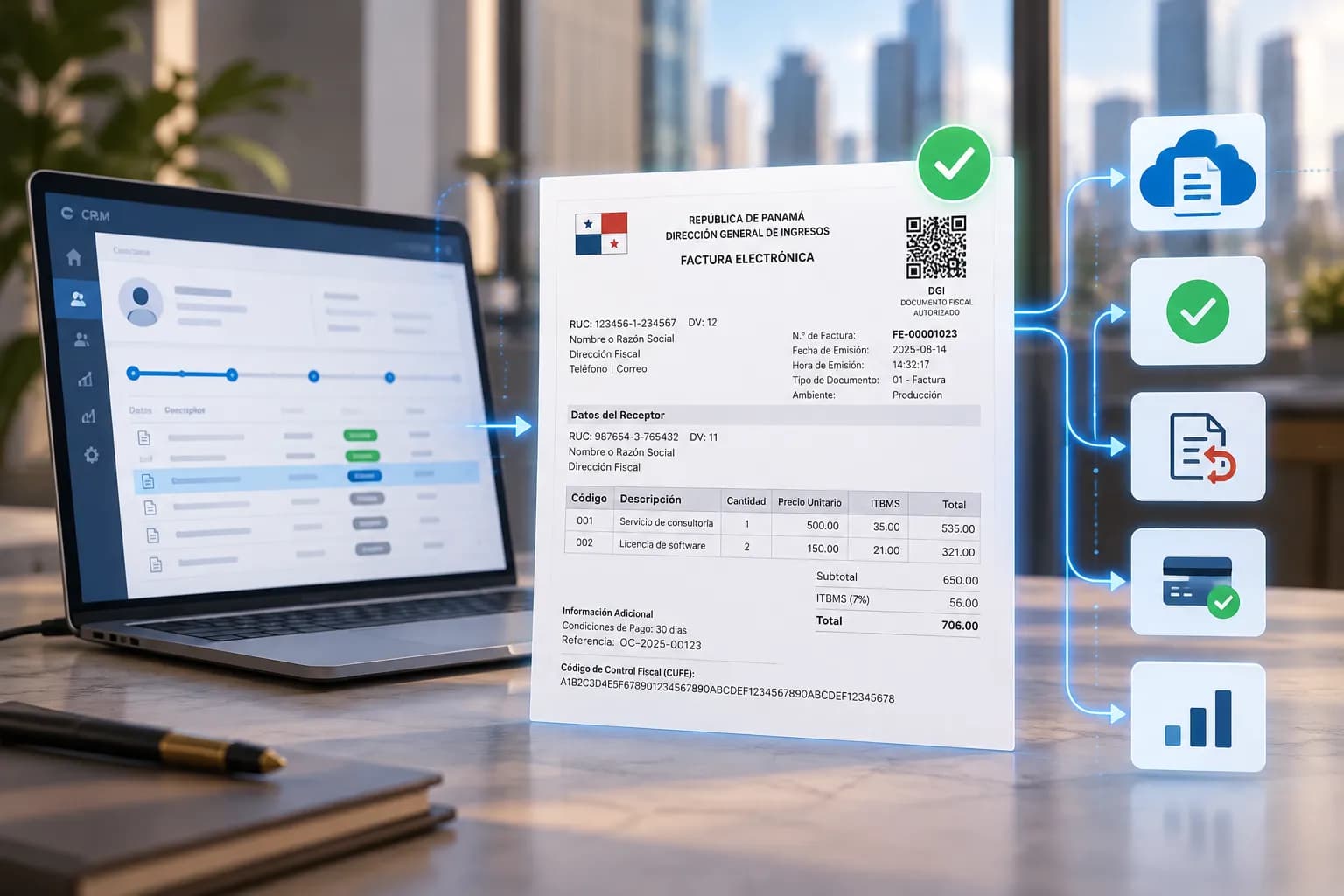
From an accounting perspective, issuing an electronic invoice proves that an invoicing event occurred. It does not prove that the books are complete.
At Nexel CPA, we look at the full financial trail:
invoice → credit note or cancellation → collection → bank → ledger → reconciliation → financial statements and tax reporting.
If one of those links is missing, a business can have valid invoices and still have unreliable accounting.
Why invoicing software is not accounting software
An invoicing system issues fiscal documents. An accounting system records the financial effect of transactions through double-entry accounting and organizes balances into assets, liabilities, equity, income and costs or expenses.
An invoice may create revenue and a receivable. A later payment clears the receivable and increases cash. A credit note can reduce the balance. Bank fees, taxes or withholding can create additional entries. The ledger must capture the complete chain.
Invoice to receivable
When an invoice is issued on credit, we expect the accounting to show a corresponding customer balance. If the invoicing platform and the ledger show different outstanding amounts, the difference should be explained.
Receivable to collection
Once a customer pays, the accounting should identify which invoice or invoices the payment settles. Unallocated collections can leave the bank balance correct while the customer aging remains wrong.
Collection to bank
Recorded cash receipts should then reconcile with bank or payment-processor evidence. Fees, timing, chargebacks, bundled settlements, withholding or foreign-exchange effects may explain legitimate differences.
Credit notes and cancellations change the books
If a credit note is issued electronically but not posted to the ledger, revenue and receivables can be overstated. If a cancellation occurs fiscally but the original accounting entry remains, the books no longer agree with the invoicing record.
The invoicing method can change; the accounting responsibility does not
Panama's 2024 Supreme Court decision created a specific exception from the mandatory use of fiscal equipment or SFEP for liberal, artisanal and artistic professions exercised independently or through civil partnerships. DGI Resolution No. 201-7826 of 14 November 2024 subsequently confirmed that the affected professionals remain responsible for issuing invoices or equivalent documents through another permitted method.
From a CPA perspective, that distinction is important but it does not change the accounting principle. Whether revenue originates from the DGI Facturador Gratuito, a PAC, another authorized invoicing method or a permitted document used by an exempt professional, the business still needs to record the income correctly, match collections, reconcile monetary accounts and preserve the supporting evidence.
For clients using SFEP, the source data may come from the DGI Facturador Gratuito or a PAC. Under the 2026 parameters established by Resolution No. 201-6299, the free modality is limited to taxpayers within the applicable B/.36,000 annual gross-income and 100-document monthly thresholds; businesses above those parameters move to PAC. The accounting objective remains the same in either case: the invoicing record and the ledger should be capable of being reconciled.
Why monthly reconciliation matters
A difference detected in the same month is usually easier to resolve. The sales team remembers the customer, the contract is available and the payment is recent. Months later, the same issue may require reconstruction.
This is why we treat monthly bookkeeping as a control process rather than simple data entry.
Electronic invoicing should relate to revenue—but not mechanically
We expect a meaningful relationship between invoicing data and revenue, but accounting should not be reduced to copying invoice totals. Customer advances, deferred revenue, credit notes and other situations may create legitimate differences.
The objective of reconciliation is to explain differences, not force every report to match without analysis.
What we want in an integrated accounting environment
consistent customer and transaction data;
reliable capture of invoices and related electronic documents;
payments matched to customer balances;
bank feeds or imports that are reconciled, not merely downloaded;
exceptions flagged for review;
the accounting ledger preserved as the financial system of record.
The DGI Facturador Gratuito is useful—but it is not an accounting integration platform
The DGI describes its Facturador Gratuito as a simplified tool for generating electronic documents and expressly states that it does not permit integration with other systems.
That may be adequate for some smaller businesses. Where CRM-to-invoice workflows, automated payment matching or deeper reporting are required, the surrounding architecture must be designed separately.
Excel should not become the invisible bridge
Spreadsheets can be useful for controlled imports and analysis, but if the revenue process depends on repeated copy-and-paste between files, reconciliation becomes fragile and difficult to audit.
When we recommend an accounting cleanup
invoices do not agree with ledger revenue;
credit notes or cancellations were never posted;
customer payments remain unallocated;
bank receipts cannot be matched to collections;
receivables contain old or duplicated balances;
tax reports cannot be reconciled to accounting;
multiple disconnected systems have been used without a reliable month-end process.
Once the differences are corrected, recurring bookkeeping can keep the systems aligned going forward.
When the problem is not accounting
Sometimes the invoice, contract and actual business arrangement do not describe the same transaction. At that point, we should not invent an accounting answer to a legal or commercial question.
The contract, licensing position, company structure or related-party arrangement may need legal review before the accounting treatment is finalized.
Nexel's view
Electronic invoicing is a compliance tool. Bookkeeping is the discipline that converts commercial activity into reliable financial information. Businesses need both.
For recurring clients, our preferred approach is to reconcile the systems monthly, resolve exceptions while they are current and use the accounting ledger as the controlled source for financial reporting.
If the chain from invoice to collection, bank and ledger cannot be followed, the fact that the invoice was issued correctly does not solve the accounting problem.
The practical accounting question
The accounting team should be able to select a material invoice and trace it to the customer balance, subsequent adjustment if any, collection, bank evidence and final ledger posting. If that cannot be done consistently, the business does not only have an invoicing issue—it has a bookkeeping-control issue.
That is where recurring bookkeeping, reconciliation and a structured accounting cleanup create value: they convert fiscal documents and bank movements into financial information that can support management reporting, financial statements and tax work.